
✨ Flat 20% Off on First Order | Use Code: TWINKLE20 • 🚚 100% Free Shipping on All Orders • 🔄 7-Day Size Exchange

Category: School & Uniform Shoes

  • Best Running Shoes for Active Kids in India: The Ultimate Performance & Safety Guide

    Best Running Shoes for Active Kids in India: The Ultimate Performance & Safety Guide

    Whether it is sprinting across the school athletics track during Sports Day practice, playing tag on the concrete park ground, or scoring goals during evening football drills, Indian kids are in constant, high-speed motion.

    However, an energetic child running on hard concrete, packed red soil, or synthetic school turf puts tremendous impact forces through their developing joints. In fact, running generates ground reaction forces equal to 2.5 to 3 times a child’s entire body weight with every single heel strike!

    When children run in flat, heavy, or stiff casual shoes, that shock travels straight up their shins, knees, and lower back, causing premature leg fatigue, heel pain (calcaneal apophysitis / Sever’s disease), and rolled ankles.

    If you are looking for the best running shoes for active kids in India, you need footwear built with targeted shock absorption, high-traction rubber outsoles, and heat-dispersing breathability.

    In this comprehensive buying and performance guide, we outline the key engineering features every active child needs, compare sole materials, and help you pick the right athletic shoes for school and sports.


    1. What Makes a Kids Running Shoe Different from a Casual Sneaker?

    Many parents wonder: Can’t my child just run in their regular lifestyle sneakers or canvas school shoes?

    While casual sneakers look fashionable, they are designed purely for standing and casual walking. Running shoes, on the other hand, feature specialized bio-mechanical engineering:

    Feature Regular Casual Sneaker Performance Kids Running Shoe
    Midsole Cushioning Basic flat rubber or cardboard foam High-rebound Phylon / EVA foam for shock absorption
    Weight Heavy (250g–350g per shoe) Feather-light (120g–180g per shoe)
    Outsole Traction Smooth or shallow decorative grooves Deep grooved rubber treads for slip prevention
    Upper Breathability Thick synthetic leather or canvas Engineered 3D mesh for airflow and heat release
    Toe Spring (Rocker) Flat from heel to toe Curved upward toe spring for smooth push-off
    Heel Protection Soft or unpadded Padded collar with Achilles notch protection

    2. The 5 Core Pillars of a Great Kids Sports Shoe in India

    When evaluating sports and running footwear for Indian conditions (hot weather, varied terrain, concrete playgrounds), ensure the shoe delivers on these five essentials:

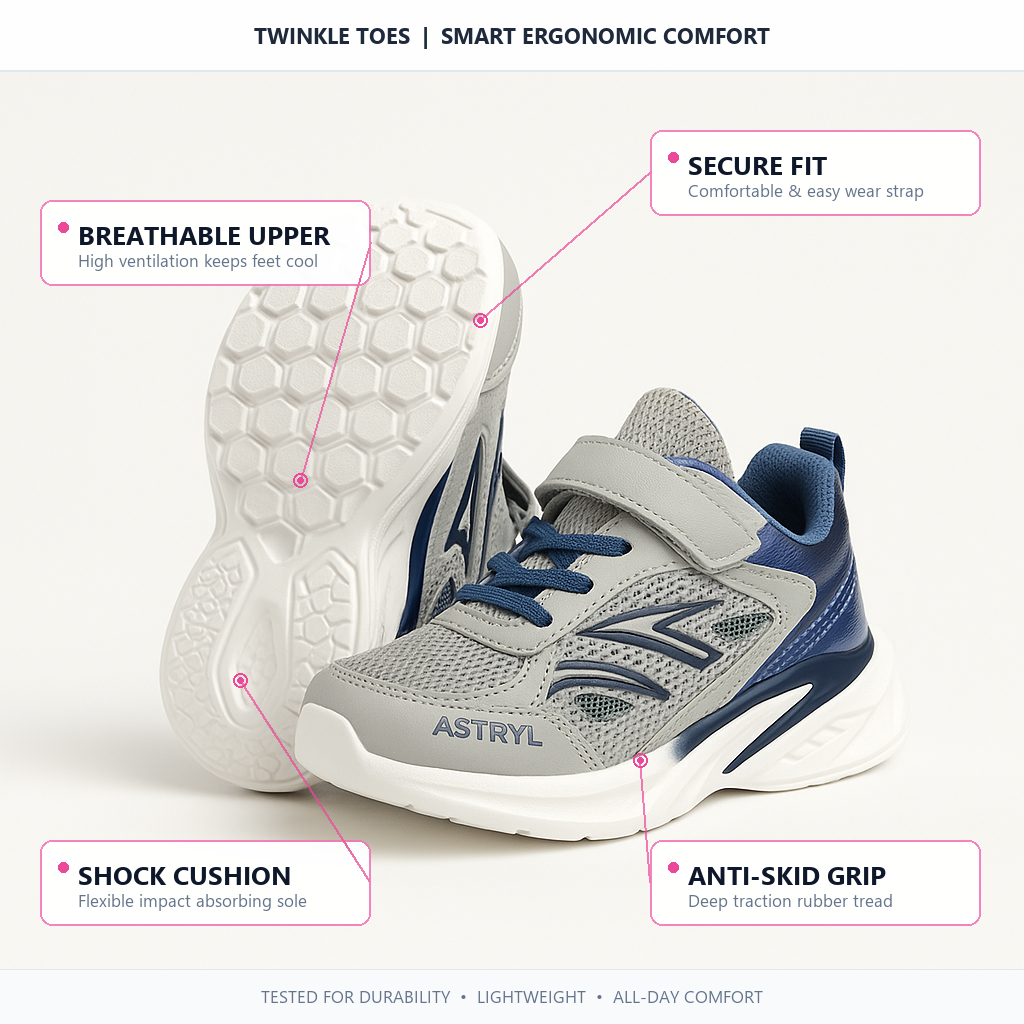
    ① High-Density EVA / Phylon Shock Absorption

    The midsole is the engine of a running shoe. Look for compressed Phylon or EVA (Ethylene-Vinyl Acetate) foam midsoles.

    • Phylon is lightweight, resilient, and acts like miniature spring mattresses under the foot.
    • It dampens bone-jarring impact when your child jumps from swings or sprints on concrete school courtyards.

    ② Multi-Directional Non-Slip Rubber Outsole

    Never buy kids sports shoes that have pure foam outsoles with no rubber tread. Smooth foam wears flat within weeks and becomes dangerously slick on wet ground or dusty tiled basketball courts.

    • Look for Thermoplastic Rubber (TPR) pods placed at high-wear zones (the heel and the ball of the foot).
    • Multi-directional waffle or hexagonal grooves provide instant braking power during sharp cuts and turns.

    ③ 3D Knitted Breathable Air-Mesh Upper

    India’s tropical climate means kids’ feet sweat profusely during 45 minutes of Physical Education (P.E.) class.

    • Shoes with closed polyurethane (PU) or plastic uppers trap hot moisture, leading to smelly bacteria, foot fungus (athlete’s foot), and friction blisters.
    • Premium running shoes utilize open-weave jacquard or 3D flying-knit mesh that continuously vents heat while maintaining lateral support.

    ④ Reinforced Protective Toe Cap (Bumper)

    Active kids do not just run in straight lines—they scrape toes against curbs, kick balls, and drag toes on balance beams. A reinforced rubber or TPU toe bumper prevents the shoe from ripping at the front seam while protecting delicate toe bones.

    ⑤ Secure Fastening: Elastic Speed Laces + Velcro Power Strap

    Untied shoelaces are one of the leading causes of school playground accidents. For kids aged 3 to 10, the ideal closure system combines stretchy elastic laces with a sturdy top Velcro lock strap. It gives a locked-in, custom instep fit in seconds with zero risk of tripping over loose laces.
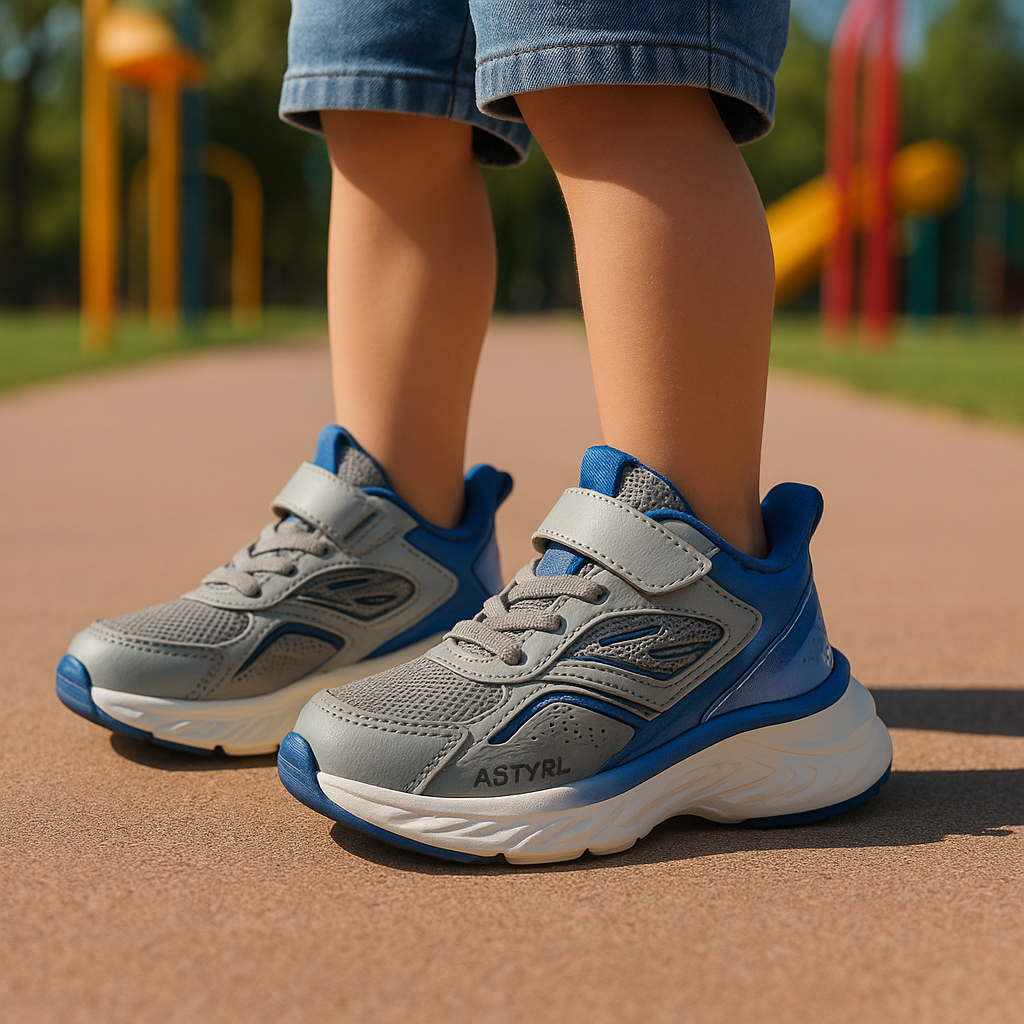

    Kids Athletic Running Shoes in Action on Outdoor Track
    Elastic speed laces with a wide Velcro lock strap keep athletic shoes firmly anchored to active feet without untying.

    3. Best Running Shoes by Activity & School Use

    Different sports require slightly different shoe dynamics. Here is how to choose based on your child’s primary activities:

    A. School Sports Day & Track Running (Sprints & Long Races)

    • Top Priority: Minimum weight + responsive rebound cushioning.
    • Ideal Pick: Lightweight mesh trainers with rockered forefoot soles that propel kids forward effortlessly.

    B. Basketball, Badminton & Indoor Court Play

    • Top Priority: Lateral stability + non-marking rubber grip.
    • Ideal Pick: Mid-profile athletic sneakers with firm sidewalls to prevent ankle rolls during quick side-to-side zig-zags.

    C. Everyday Playground Play & Park Jogging

    • Top Priority: Abrasion resistance + easy-to-clean materials.
    • Ideal Pick: Durable sneakers with reinforced rubber toe guards and dark-tone mesh that hides playground dirt.

    4. How to Spot Signs of Poor or Worn-Out Sports Shoes

    Active children typically wear through sports shoes faster than casual shoes. Replace their running shoes immediately if you see:

    1. Worn-Out Outsole Treads: The bottom rubber grooves have flattened out smooth under the ball of the foot or the outer heel.

    2. Compressed Midsole Creasing: Deep horizontal wrinkle lines across the foam midsole that do not bounce back, indicating the cushioning foam has collapsed.

    3. Uneven Wear Pattern: The shoe tilts noticeably inwards or outwards when placed on a flat tabletop.

    4. Child Complaining of Heel or Shin Pain: Repeated complaints of sore heels after sports practice is a classic indicator that shock absorption is depleted.


    5. Pro-Tips: Sizing Sports Shoes for Active Kids

    When sizing running shoes, never buy them tight:

    • As a child runs, blood flow increases, causing their feet to naturally swell by up to half a size.
    • Ensure there is a full 1.0 cm to 1.2 cm space between the longest toe and the front of the shoe when standing in sports socks.
    • Have your child jump, jog, and do a quick sprint across the room during try-on. If their heel slips out of the back, tighten the Velcro strap or drop down half a size.

    Discover the latest high-performance boys sports trainers and girls athletic running sneakers engineered with shock-absorbing Phylon soles, lightweight 3D mesh, and durable grip at TwinkleToes Kicks.


    Frequently Asked Questions (FAQ)

    Q1. What is the best sole material for kids running shoes in India?

    A dual-density sole combining a lightweight EVA/Phylon foam midsole (for shock absorption and bounce) with a Thermoplastic Rubber (TPR) textured bottom outsole (for traction and wear resistance on concrete) provides the best balance of safety and comfort.

    Q2. How often should active kids replace their running shoes?

    Active kids who engage in daily sports typically need new running shoes every 4 to 6 months, either because their feet have outgrown the size or because the foam midsole cushioning has compressed from intense play.

    Q3. Can kids wear running shoes as everyday school shoes?

    Yes, running shoes with black or white colorways that adhere to school dress codes make fantastic everyday school shoes because they provide superior arch support and cushioning compared to traditional stiff, unpadded leather formal shoes.

    Q4. Are lightweight shoes better for children than heavy shoes?

    Absolutely. Heavy footwear strains a child’s hip flexors and ankle tendons, causing them to drag their feet and trip. Lightweight running shoes (under 200 grams) allow for natural running kinematics and faster, fatigue-free movement.
  • How to Prevent Shoe Bites in Kids School Shoes: 7 Instant Hacks Every Parent Must Know

    How to Prevent Shoe Bites in Kids School Shoes: 7 Instant Hacks Every Parent Must Know

    Every year when the new school term begins in India, thousands of children come home in tears on day one. The culprit? Painful, stinging shoe bites and heel blisters.

    Traditional school shoes in India are notorious for having stiff, unyielding leather heel counters and rock-hard rubber soles. Combine that with 8 hours of standing in school assemblies, rushing up staircases, and playing sports in hot, humid weather, and you have a recipe for severe chafing.

    If you are wondering how to prevent shoe bites in kids’ school shoes, or want to know what makes modern lightweight black school shoes with Velcro so superior, this guide gives you instant, tested home remedies and prevention secrets.


    1. Why Do New School Shoes Bite?

    Before treating shoe bites, it helps to understand why they happen:

    1. Friction and Stiff Materials: Fresh out of the box, synthetic leather and rigid shoe collars do not conform to your child’s delicate foot shape. Every step creates severe friction against the Achilles tendon.
    2. Moisture and Sweat: Indian school days are warm. Trapped sweat softens the top layer of skin, making it 5x more susceptible to peeling and blistering.
    3. Inappropriate Sizing: A shoe that is slightly too loose causes the heel to slip up and down with every stride, creating continuous chafing.

2. 7 Tested Hacks to Stop Shoe Bites from New School Shoes

Don’t wait for your child to limp home! Use these quick hacks before they wear their shoes to school:

Hack 1: The Petroleum Jelly / Coconut Oil Pre-Treatment

The night before school, apply a generous layer of Vaseline (petroleum jelly) or pure coconut oil to the inside heel counter and edges of the shoe collar. Let it absorb overnight. This softens rigid synthetic leather and lubricates the surface to eliminate friction.

Hack 2: Wear Thick Socks at Home (The 30-Minute Break-in)

Never let your child wear brand-new shoes directly to school for an 8-hour stretch. 3 days before school reopens, have them wear the new shoes around the house for 20 to 30 minutes with a pair of thick winter socks. The warmth and pressure gradually stretch the stiff collar without harming their skin.

Hack 3: Anti-Chafing Roll-on or Talcum Powder

Dust your child’s feet—especially heels and pinky toes—with anti-friction powder before putting on socks. This absorbs sweat and prevents the sock fabric from clinging to skin.

Hack 4: The Hairdryer & Bend Technique (For Stiff Soles)

Hold a hairdryer on medium heat about 6 inches away from the stiff heel counter for 45–60 seconds. While the material is warm and pliable, gently bend and massage the heel fabric back and forth with your hands to break the stiffness.

Hack 5: Seamless Cotton Socks (No Bulky Seams)

Check your child’s uniform socks. Cheap socks often have thick, raised ridge seams across the toes that rub raw during physical education (PE) classes. Switch to breathable, seamless combed-cotton socks.

Hack 6: Moleskin or Hydrocolloid Blister Tape

If your child has sensitive skin, apply a small patch of medical silicone blister tape or moleskin directly onto the back of their heel before friction starts.

Hack 7: Choose Lightweight Velcro Shoes with Padded Collars

The ultimate long-term fix is choosing modern school shoes engineered with cushioned heel collars and flexible TPR soles, eliminating stiff plastic inserts altogether.


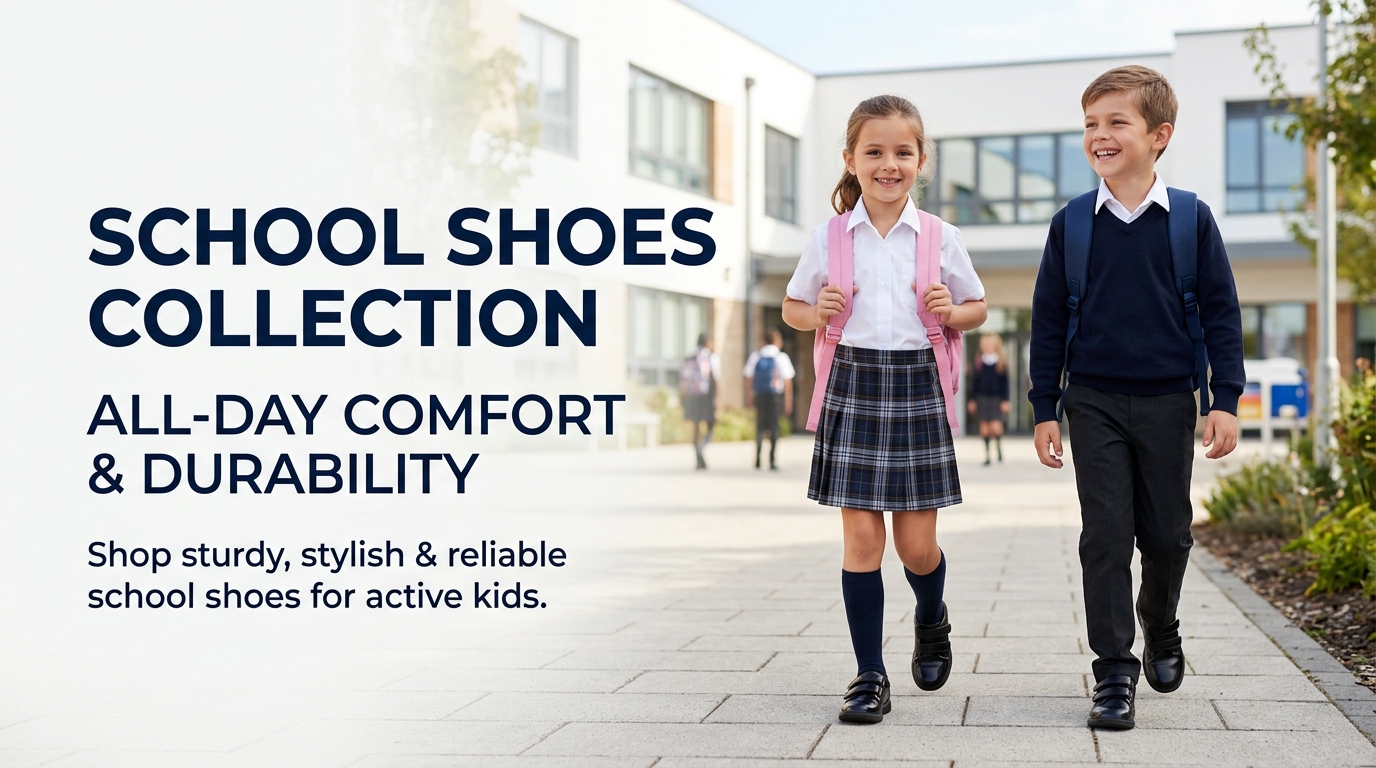
Durable and Breathable School Shoes for Boys and Girls
TwinkleToes Kicks school uniform shoes designed with ultra-cushioned ankle collars and high-grip soles.

3. Why Lightweight Black School Shoes with Velcro Beat Traditional Lace-Ups

Primary school kids (ages 4 to 10) are constantly running during lunch breaks and sports periods. Traditional heavy lace-up leather shoes create three major issues:

  • Tripping Hazards: Laces constantly come undone on playgrounds.
  • Heavy Foot Fatigue: Traditional school shoes weigh over 400g per pair, draining kids’ energy and straining calves.
  • Zero Breathability: Cheap Rexine shoes trap heat, leading to bad foot odor and fungal infections.

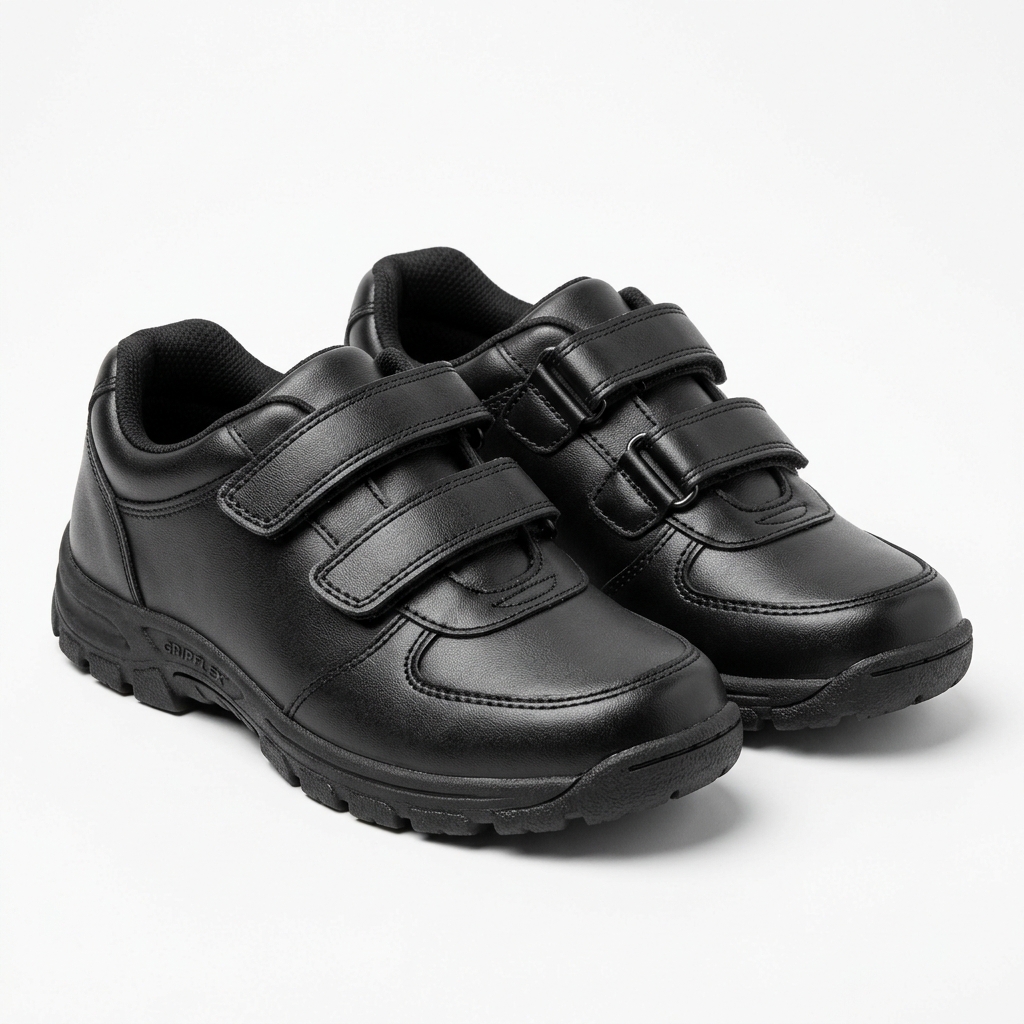
Modern parents across India are switching to lightweight black school shoes with Velcro because they feature:

  1. Double Velcro Straps: Fast, secure locking that even kindergarteners can adjust themselves.
  2. Padded Ankle Support: Foam-lined collars that physically prevent shoe bites from Day 1.
  3. Shock-Absorbing TPR Soles: Cushions the impact of jumping on concrete school grounds.

  4. 4. How to Clean White Canvas School Shoes Fast (Without Yellow Stains)

    White sports uniform shoes are required once or twice a week, but Indian dust and mud turn them brown instantly. Worse, when washed with harsh detergents and dried in harsh sunlight, they often develop ugly yellow stains.

    The Foolproof 4-Step Cleaning Method:

    1. Dry Brush First: Always knock off loose dirt with a dry toothbrush before introducing water.
    2. Baking Soda + White Toothpaste Paste: Mix 1 tablespoon of baking soda with 1 tablespoon of white toothpaste and a little water. Scrub the canvas gently with an old toothbrush.
    3. Rinse with Lukewarm Water: Wipe clean with a damp microfiber cloth.
    4. The Paper Towel Trick (Stops Yellowing): Wrap the wet shoes completely in white tissue paper or paper towels before air drying. As the shoes dry, the paper towels pull the yellow chemical residue away from the canvas!

    5. 5. Upgrade to TwinkleToes All-Day Comfort School Shoes

      At TwinkleToes Kicks, we engineered our School & Uniform Shoe collection to solve the very problems parents complain about:

      • Zero-Bite Padded Collar: 360-degree memory foam padding around the ankle.
      • Ultra-Lightweight (<220g): Keeps your child energetic from 8 AM to 3 PM.
      • Durable Anti-Scuff Toe Cap: Resists playground scuffs and kicks.
      • High-Grip Anti-Skid Rubber Soles: Prevents dangerous slips on wet school corridors.

      👉 Explore our School & Uniform Shoes Collection (Black & White Models)


      6. Frequently Asked Questions (FAQ)

      Q1. How do you heal a shoe bite fast in kids?

      Clean the blister with mild soap and water. Never pop an intact blister! Apply an antiseptic cream or pure aloe vera gel, cover it with a sterile hydrocolloid plaster, and keep the child in open-toe soft clogs or sandals until fully healed.

      Q2. How can I soften stiff school shoes quickly?

      Apply petroleum jelly or coconut oil along the inside rim of the heel counter, warm it gently with a hairdryer on low heat for 1 minute, and gently flex the heel counter with your thumbs to loosen the stiff structure.

      Q3. Why do school shoes turn yellow after washing?

      Yellow stains appear when alkaline chemical residue from detergents oxidizes under direct sunlight. To prevent this, rinse thoroughly, dry in the shade, and wrap the shoes in white paper towels while drying.