✨ Flat 20% Off on First Order | Use Code: TWINKLE20 • 🚚 100% Free Shipping on All Orders • 🔄 7-Day Size Exchange

Category: Toddler & Baby Shoes

  • Barefoot Shoes for Toddlers in India: The Science, Benefits & Parent Buying Guide

    Barefoot Shoes for Toddlers in India: The Science, Benefits & Parent Buying Guide

    If you have spent any time recently in modern parenting communities or pediatric foot health forums, you have likely heard a major buzzword: Barefoot Shoes (also known as minimalist footwear).

    For generations, well-meaning shoe companies convinced parents that babies and toddlers needed heavy, stiff, thick-soled boots with rigid arch supports to “shape” their feet.

    However, modern pediatric biomechanics and sports medicine have completely turned that outdated philosophy upside down. Research now shows that the best shoe for a developing child is one that mimics being completely barefoot!

    In India, where children transition from crawling indoors to walking on rough pavements, asphalt, and playground gravel, parents are asking: What are barefoot shoes for toddlers, and why are they so essential for healthy posture and balance?

    In this science-backed guide, we will unpack the biology of toddler feet, explain the 4 golden pillars of barefoot footwear, and help you choose the best minimalist first-walking shoes in India.


    1. What Exactly Is a “Barefoot Shoe”?

    A barefoot or minimalist shoe is not a shoe with holes or an absence of protection. Rather, it is footwear engineered to interfere as little as possible with the natural movement, shape, and sensory perception of the human foot.

    While traditional children’s shoes often feature thick elevated heels, stiff arch shanks, and tapered pointy toes, a true barefoot shoe delivers on four non-negotiable principles:

    ① Zero-Drop Sole (Completely Flat)

    In a zero-drop shoe, the heel and the toe are at the exact same height from the ground. Traditional sneakers often elevate the heel by 8–15mm, which shifts a toddler’s center of gravity forward, forcing the hips and lower back to compensate and distorting natural posture.

    ② Anatomical Wide Toe Box

    A barefoot shoe mirrors the natural fan-shape of a baby’s foot. The toe box is generously rounded and wide, allowing all five toes to splay outwards without constraint when pushing off the floor.

    ③ Maximum Flexibility (Twist & Roll)

    A true barefoot shoe can be rolled up like a sushi roll and twisted effortlessly in any direction with two fingers. It moves with the foot, rather than forcing the foot to bend inside a rigid container.

    ④ Thin, Sensory-Rich Sole (Proprioception)

    The sole is thin (between 3mm to 6mm) yet puncture-resistant. It shields little feet from hot pavement, glass, and thorns while allowing the thousands of nerve endings on the sole to feel ground textures and send neurological feedback to the developing brain.


    2. The Science: Why Barefoot Walking Builds Stronger Feet

    The human foot is an engineering marvel containing 26 bones, 33 joints, and over 100 muscles, tendons, and ligaments.

    At birth, a baby’s foot is not a miniature adult foot—it is composed primarily of soft cartilage. The bones do not fully ossify (harden) until a child reaches their late teenage years!

    Here is why barefoot-style footwear is transformative for young toddlers:

    1. Natural Arch Development: Just as lifting weights builds bicep muscles, flexing the foot against the floor activates the intrinsic foot flexor muscles. Packing a healthy foot into a stiff artificial arch brace causes those muscles to atrophy from disuse.

    2. Superior Balance & Agility (Proprioception): The bottom of the foot is one of the most nerve-dense sensory organs in the human body. Feeling the contours of the ground helps toddlers make instant micro-adjustments in their ankles, drastically reducing trips, slips, and clumsy falls.

    3. Prevention of Deformities: Narrow, tapered toe boxes in commercial shoes are the primary cause of bunions (hallux valgus), hammer toes, and ingrown toenails later in life. Wide barefoot toe boxes keep the big toe perfectly straight.
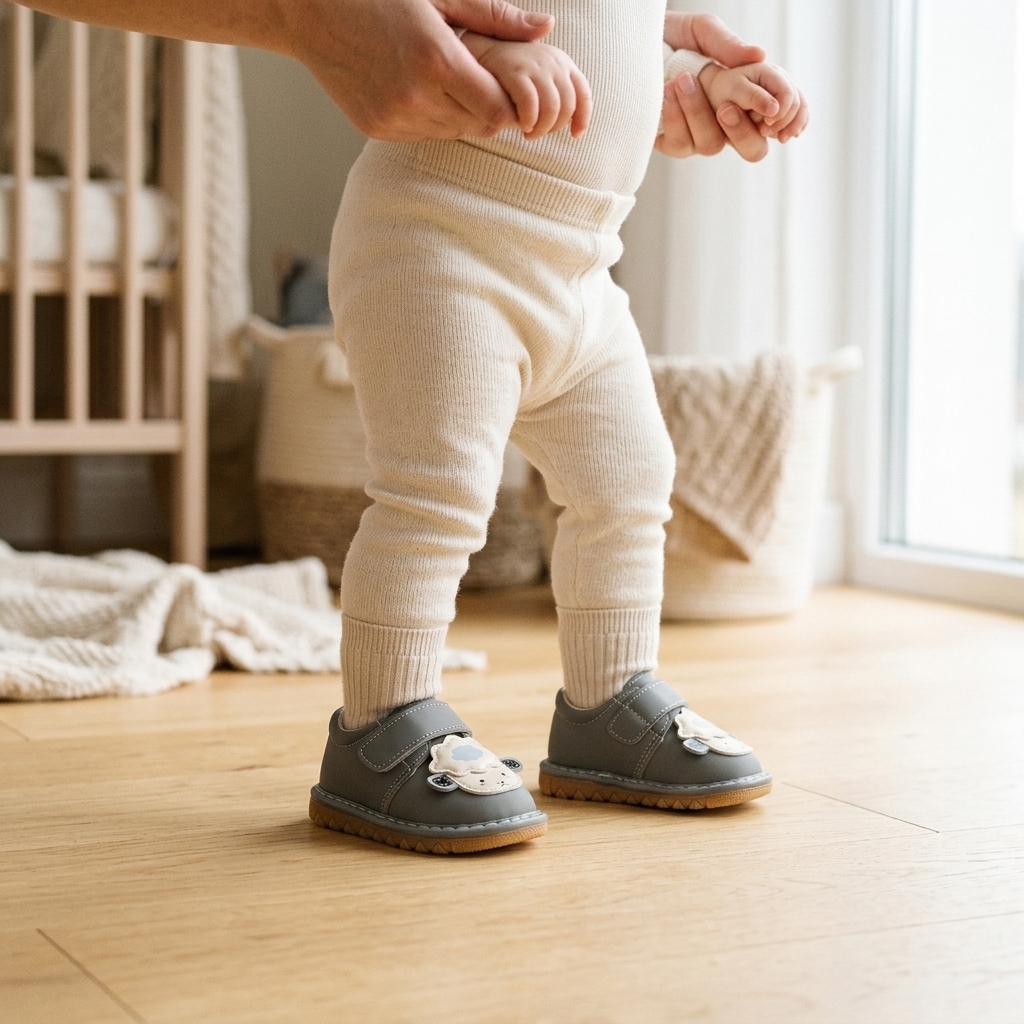

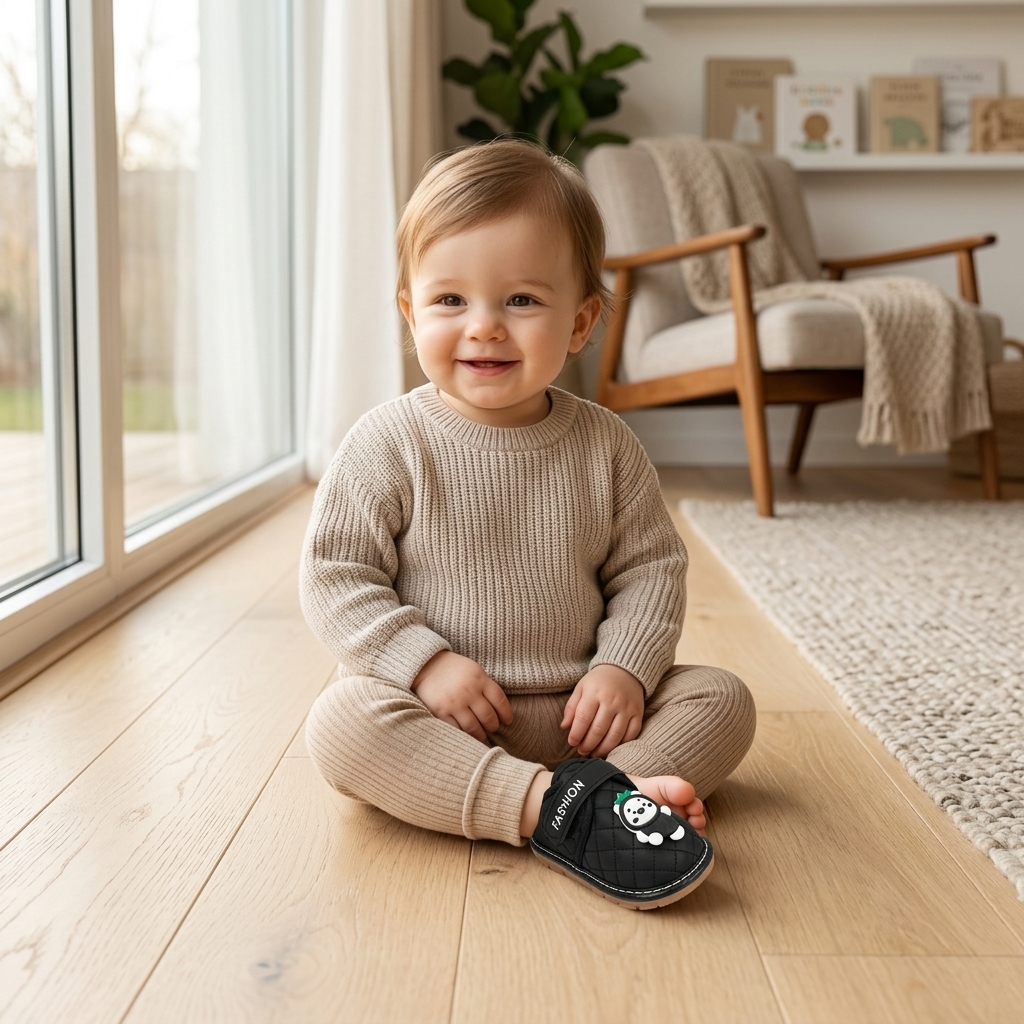
    Toddler Walking in Flexible Barefoot First Walkers
    Soft-sole barefoot trainers allow tiny feet to grip, flex, and develop naturally on indoor and outdoor terrains.

    3. Barefoot Shoes vs. Traditional Stiff Shoes: Feature Breakdown

    Feature True Barefoot / Minimalist Shoe Traditional Commercial Shoe
    Heel Elevation Zero-Drop (100% flat from heel to toe) Elevated heel (5mm to 15mm lift)
    Toe Box Shape Wide, fan-shaped (mirrors foot anatomy) Narrow, tapered, or pointy
    Sole Flexibility Can fold in half and twist 360 degrees Stiff, rigid shank with minimal bend
    Sole Thickness Thin (3mm to 6mm) for sensory ground feel Thick, chunky foam (15mm to 30mm)
    Arch Support Natural (allows foot muscles to strengthen) Artificial rigid foam or plastic wedge
    Shoe Weight Ultra-lightweight (<90 grams) Heavy (180g to 300g per shoe)

    4. Are Barefoot Shoes Safe for Indian Roads and Terrains?

    A common question among Indian parents is: “Our streets have gravel, sharp stones, broken glass, and dog thorns. Is a barefoot shoe really safe outdoors?”

    The answer is an emphatic YES—provided you choose high-quality barefoot shoes with a puncture-resistant Thermoplastic Rubber (TPR) outsole.

    • A high-grade barefoot sole is thin enough to flex, yet tough enough to prevent sharp gravel or nails from piercing through.
    • The flexible rubber outsole provides high-friction traction on smooth marble tiles, hot tarmac, and wet playground grass.
    • Indoors on clean floors, allow your child to go completely barefoot. When stepping outside, slip on their barefoot minimalist shoes for complete protection without sensory deprivation.

    5. How to Transition Your Toddler to Barefoot Shoes

    If your child has previously worn stiff, heavily cushioned sneakers, transition them gradually:

    1. Start with Daily Barefoot Indoor Play: Encourage your child to walk barefoot on varied safe indoor surfaces: wool rugs, foam mats, wooden floors, and cool tiles.

    2. Begin with Short Outdoor Walks: Have your toddler wear their barefoot shoes for 30-minute park visits or playground sessions, allowing their calf muscles and foot tendons to adapt to the zero-drop flat posture.

    3. Inspect Footwear Regularly: Because barefoot shoes have thin, responsive soles, check the soles every 3 months for signs of excessive outer wear or outgrown length.

    Discover TwinkleToes ergonomically crafted first walking shoes and soft-sole casual kicks engineered on anatomical zero-drop lasts with wide rounded toe boxes.


    Frequently Asked Questions (FAQ)

    Q1. What are barefoot shoes for toddlers?

    Barefoot shoes for toddlers are minimalist shoes designed with zero-drop flat soles, wide fan-shaped toe boxes, ultra-thin flexible outsoles, and lightweight materials that allow natural foot development and sensory ground feedback.

    Q2. Are barefoot shoes good for toddlers learning to walk?

    Yes, pediatric podiatrists widely recommend barefoot shoes for early walkers. They strengthen foot arch muscles, enhance balance, and prevent toe crowding compared to stiff, heavy shoes.

    Q3. Can toddlers wear barefoot shoes on hard concrete in India?

    Yes. Quality barefoot shoes feature durable, puncture-resistant rubber outsoles that shield delicate feet from hot concrete, rough stones, and glass while maintaining natural foot flexion.

    Q4. What is a “zero-drop” shoe for kids?

    A zero-drop shoe has zero difference in height between the heel and the toe (completely level). This maintains a child’s neutral spine and pelvic alignment without tilting their center of gravity forward.
  • Best Shoes for Toddlers with Wide Feet in India: The Parent Guide to Chubby, High-Instep Feet

    Best Shoes for Toddlers with Wide Feet in India: The Parent Guide to Chubby, High-Instep Feet

    Every parent who has ever tried to force a squirming toddler’s chubby foot into a stiff, narrow shoe knows the daily struggle. You push, pull, wiggle, and tug—only for your toddler’s heel to stay jammed halfway down the collar while they cry in discomfort.

    And when you finally manage to squeeze their foot inside, you take the shoe off 20 minutes later only to find angry red indentation marks across the top of their bridge and squeezed, overlapping pinky toes.

    If this sounds familiar, you are not alone: over 60% of toddlers in India have naturally wide, fleshy feet with a high instep (puffy bridge).

    Yet most mass-produced children’s shoes are built on narrow Western lasts that pinch developing bones. Finding the best shoes for toddlers with wide feet in India is essential not just for peaceful morning routines, but for safeguarding your baby’s natural bone alignment and balance.

    In this guide, we break down why toddler feet are shaped this way, how to recognize wide and high-instep feet, the crucial shoe features to look for, and the best fitting techniques.


    1. Why Do Indian Toddlers Have Wide, Chubby Feet?

    Many anxious parents worry that their child’s wide or puffy feet indicate a medical issue. Rest assured, this is a completely natural biological phase:

    1. Incomplete Bone Ossification: At 1 to 3 years old, a toddler’s foot is largely composed of pliable cartilage rather than hard bone.

    2. Infant Fat Pads (Cushioning Layer): Babies are born with a thick, insulating fat layer covering the top of the foot and the inner sole. This natural padding protects fragile tendons while learning to bear weight.

    3. Natural Fan-Shape Splay: Unlike adults whose feet have been reshaped by years of tapered shoes, a healthy toddler’s foot is triangular—narrow at the heel and fan-shaped across the toes. When bearing weight, the toes spread out wide to provide maximum balance.

    As your child grows, runs, and jumps, foot fat naturally leans out between ages 3 to 5 years, and the foot transitions toward a more defined adult profile.


    2. Wide Feet vs. High Instep: What Is the Difference?

    Parents often confuse a wide foot with a high instep, but they require slightly different footwear solutions:

    • Wide Foot (Horizontal Width): The foot is unusually broad across the ball of the foot (from the base of the big toe across to the pinky toe). Shoes feel tight on the sides, pinching the outer toes.
    • High Instep (Vertical Bridge Height): The instep is the top bony bridge of the foot between the ankle and the toes. A high instep creates a puffy vertical curve. Shoes feel impossible to slide into, and the tongue or top strap cuts painfully into the top of the foot.
    💡 Pro Tip:
    The Red Mark Test: Take off your toddler’s shoes after 15 minutes of walking. Red pressure marks on the sides of the toes mean the shoe is too narrow. Red horizontal lines across the top arch mean the shoe lacks instep depth.

    Toddler Walking Comfortably in Wide Fit Shoes
    Flexible, wide-fit first-walking sneakers allow tiny toes to splay freely for optimal balance and motor stability.

    3. What to Look for in the Best Shoes for Toddlers with Wide Feet in India

    When shopping for wide and chubby toddler feet in India, never buy stiff, narrow, slip-on loafers. Prioritize these 5 critical design elements:

    ① Anatomical Wide & Rounded Toe Box

    Look for shoes that mirror the natural fan-shape of a child’s foot. A wide, rounded toe box ensures all five toes can lie flat and wiggle freely. Avoid tapered, pointy, or almond-shaped toe profiles that force the pinky toe underneath the fourth toe.

    ② Extra-Wide U-Throat Opening

    The “throat” is the opening where the foot enters the shoe. For chubby toddler feet, look for a U-shaped throat where the tongue pulls back completely flat toward the toe. This creates a gaping entrance so chubby heels slide in effortlessly with zero resistance.

    ③ Fully Adjustable Dual-Velcro Straps

    Elastic slip-ons and fixed fake laces are a nightmare for high insteps because they cannot accommodate vertical height. Long, adjustable hook-and-loop (Velcro) straps allow parents to loosen the volume across the bridge while locking down the heel snugly.

    ④ Stretchy & Flexible Upper Materials

    Rigid synthetic patent leather does not give. Opt for breathable knitted mesh, soft canvas, or quilted textile uppers that gently stretch and mold to your toddler’s unique foot width without pinching.

    ⑤ Removable Insole for Extra Depth

    A fantastic secret for high insteps: shoes with removable cushioned insoles. Removing the stock insole or replacing it with an ultra-thin leather liner instantly frees up an extra 3 to 4 millimeters of vertical depth.


    4. Wide Fit Feature Comparison Guide

    Shoe Feature Best Choice for Wide / Chubby Feet What to Avoid
    Toe Shape Broad, anatomical, rounded fan-shape Tapered, pointy, or narrow triangular toe
    Closure Dual long Velcro straps or lace-up Fixed elastic bands, slip-on moccasins, buckles
    Shoe Tongue Free-floating, fully pull-back tongue Sewn-in gusseted tongue with tight collar
    Upper Material 3D knit mesh, soft quilted cotton, supple leather Rigid patent plastic, stiff unyielding canvas
    Sole Flexibility High forefoot flex with flat zero-drop heel Stiff heavy block heel or inflexible wooden shank

    5. Fitting Hacks: How to Size Wide Toddler Feet

    When buying shoes online for a wide-footed toddler in India, standard size charts can be tricky. Use these expert fitting strategies:

    Hack 1: Use the Paper Insole Trace Method

    Pull out the shoe’s removable insole and place it on the floor. Have your toddler stand directly on top of the insole.

    • If their pinky toe or big toe spills over the sides of the insole, the shoe is too narrow.
    • There should be 0.8 cm to 1.0 cm of length space at the front, and the entire width of the foot should sit inside the insole borders.

    Hack 2: Should You Size Up for Wide Feet?

    If a wide-width option is unavailable, parents frequently buy one size larger.

    • Sizing up half a size is acceptable if the shoe has a secure ankle strap to prevent heel slippage.
    • Do not size up two full sizes: Excess length creates a clown-shoe effect, causing your toddler to trip over the front bumper and drag their feet.

    Hack 3: Choose Seamless, Low-Seam Socks

    Thick tube socks with bulky toe seams can cause intense blister friction inside wide shoes. Always pair wide shoes with seamless, thin combed cotton socks that prevent chafing.

    Explore our collection of wide-fitting toddler first walking shoes and cushioned boys sneakers built with roomy anatomical toe boxes and high-instep friendly Velcro closures.


    Frequently Asked Questions (FAQ)

    Q1. Are wide feet common in toddlers?

    Yes, wide and chubby feet are completely normal in over 60% of toddlers. The presence of natural baby fat pads on the sole and bridge makes their feet appear broader until foot muscles and arches mature around ages 4 to 5.

    Q2. How can I tell if my toddler’s shoes are too narrow?

    Warning signs include difficulty getting the shoe on, toddler crying or trying to pull shoes off immediately, red marks along the outer edges of the foot or pinky toe, and toes overlapping inside the shoe.

    Q3. Can tight or narrow shoes harm my toddler’s feet?

    Yes. Toddler bones are soft cartilage. Forcing feet into narrow shoes can cause bunions, ingrown toenails, curled toes, poor balance, and early fatigue during walking.

    Q4. What type of shoe closure is easiest for high-instep toddler feet?

    Dual adjustable Velcro straps with a deep U-throat opening are the best option. They allow the shoe to open completely wide so chubby feet slide in without squeezing.


  • Best Shoes for Flat Feet Toddlers in India: What Pediatric Podiatrists Want You to Know

    Best Shoes for Flat Feet Toddlers in India: What Pediatric Podiatrists Want You to Know

    You are watching your 18-month-old toddler toddle across the marble living room floor, and suddenly you notice something alarming: when their foot lands, their entire sole seems completely flat against the ground. There is no arch curve, and their ankles may even tilt slightly inward (overpronation).

    Naturally, parents panic and turn to Google: Does my child have flat feet? Do they need corrective orthopedic boots? What are the best shoes for flat feet toddlers in India?

    Take a deep breath: In almost 90% of toddlers aged 1 to 4 years, flat feet are completely normal, harmless, and temporary.

    However, providing the right supportive, flexible footwear during these crucial formative years makes a massive difference in preventing muscle fatigue, foot pain, and posture misalignment.

    In this clinical yet parent-friendly guide, we will break down the biology of toddler feet, debunk myths about arch support, outline the key features to look for in shoes for flat-footed kids in India, and help you know when to consult a specialist.


    1. Are Toddler Flat Feet Normal? (The Fat Pad Secret)

    The most important fact every parent must understand is that all babies are born with flat feet.

    When toddlers begin walking, their feet look flat for two anatomical reasons:

    1. Infant Fat Pads: Babies are born with a thick, protective layer of adipose (fat) tissue on the inner sole of the foot. This pad naturally masks the developing internal bony arch.

    2. Lax Ligaments: Toddler joints and tendons are incredibly soft, flexible, and pliable. When bearing the child’s body weight, the foot structure naturally flattens out against the floor.

    As your child walks, runs, jumps, and climbs, the intrinsic muscles of the foot strengthen, the baby fat pad gradually dissolves, and the medial longitudinal arch develops naturally between ages 4 to 7 years.

    Flexible Flatfoot vs. Rigid Flatfoot: Quick At-Home Test

    To determine whether your child’s flat foot is normal:

    • The Toe-Stand Test (Jack’s Test): Ask your toddler to stand on their tiptoes. If a distinct curved arch appears when on their toes, they have flexible flatfoot (completely normal).
    • The Sitting Test: Lift your child’s foot while they are seated with feet dangling. If the arch is visible in the air but flattens only when standing, it is flexible.
    • Rigid Flatfoot (Rare): If the foot remains completely rigid and flat even when off the ground or up on tiptoes, or if the child complains of foot, shin, or knee pain, schedule an assessment with a pediatric orthopedic doctor.

    2. Does Your Toddler Really Need “Hard Arch Support” Shoes?

    For decades, well-meaning elders recommended heavy, stiff, high-topped leather boots with rigid arch lumps for toddlers with flat feet. Modern pediatric science has proved this outdated advice actively harmful.

    Why Rigid Arch Inserts Are Bad for Healthy Toddlers:

    • Muscles Need Work to Grow: Just as an arm in a rigid plaster cast becomes weak from lack of movement, packing a baby’s foot with a stiff artificial arch brace prevents foot muscles from contracting.
    • Restricted Proprioception: Stiff soles prevent the thousands of sensory nerves on the sole from reading floor variations, leading to clumsy footing and tripping.

    Pediatric Podiatry Rule: Unless prescribed by a pediatric orthotist for a diagnosed medical condition (such as cerebral palsy or tarsal coalition), toddlers do NOT need hard, high arch inserts. What they truly need are shoes that provide heel stability, ample toe room, and natural flexibility.


    Toddler Walking in Ergonomic Supportive Sneakers
    Never restrict a toddler’s natural gait with rigid arch casts; opt for flexible lightweight sneakers with solid rear-foot stability.

    3. Key Features of the Best Shoes for Flat Feet Toddlers

    When shopping for shoes for a toddler with flat feet or overpronation in India, look for footwear that balances stability with natural movement:

    ① Firm Heel Counter (Rearfoot Stability)

    This is the single most critical feature. The heel counter is the vertical cup at the back of the shoe that hugs the Achilles heel.

    • How to test: Press your thumb firmly against the back collar of the shoe. If it collapses completely flat like a slipper, it offers zero alignment support. A supportive shoe will resist your squeeze, keeping your toddler’s heel straight and preventing inward ankle collapse.

    ② Torsion Stability with Forefoot Flexibility

    A supportive shoe should bend in the right place:

    • The shoe MUST bend easily at the ball of the foot (where toes naturally bend during push-off).
    • The shoe should NOT twist like a wet washcloth through the middle arch (torsional rigidity).

    ③ Wide & Anatomical Toe Box

    When toddlers with flat feet bear weight, their toes splay outwards for stability. Narrow or tapered shoes squeeze the big toe inward, which weakens the arch tendon (posterior tibial tendon). A wide, round toe box lets all five toes grip the ground naturally.

    ④ Non-Slip Shock Absorbing Sole

    Indian homes predominantly have polished marble, vitrified tiles, or terrazzo flooring. A flat foot landing on hard, slick tiles requires a high-traction Thermoplastic Rubber (TPR) or Phylon sole with grooved tread to absorb shock and prevent slips.

    ⑤ Adjustable Dual-Velcro Straps

    Laces can come untied and cause trips, while loose slip-ons cause toddlers to claw their toes just to keep the shoes on. Dual-strap Velcro allows parents to customize the fit snugly across high or flat insteps.


    4. Feature Comparison: What to Look For

    Feature Recommended for Flat Feet What to Avoid
    Heel Support Reinforced, firm heel counter cup Flimsy, collapsible cloth back
    Sole Bend Bends only at the toe line (metatarsals) Bends in half at the middle arch or twists like a rag
    Toe Box Wide, rounded, fan-shaped Pointy, narrow, or tapered toe shape
    Fastening Dual adjustable Velcro straps Loose backless clogs or unsupportive flip-flops
    Insole Cushioned memory foam with gentle contour Hard plastic wedge or zero-cushion cardboard footbed
    Weight Lightweight (< 150 grams per shoe) Heavy, clunky, rigid work boots

    5. Daily At-Home Exercises to Build Strong Foot Arches

    In addition to wearing supportive shoes outdoors, encourage these fun daily play habits:

    1. Barefoot Indoor Play on Varied Textures: Let your child walk barefoot indoors on carpet, foam mats, wooden floors, and grass. Sensory feedback fires the foot’s intrinsic flexor muscles.

    2. Pebble / Marble Pickup Game: Place small foam balls or smooth stones on the floor and encourage your toddler to pick them up using only their toes.

    3. Animal Walks (Bear Walk & Penguin Walk): Have your child walk on their heels like a penguin, or crawl on hands and feet like a bear. This stretches the calf and activates the foot arches.

    4. Sand Walking: Walking on clean beach sand or garden grass forces the arch to constantly micro-adjust, creating phenomenal natural foot strength.


    When Should You Consult a Doctor?

    Consult a pediatric orthopedist if you notice any of the following red flags:

    • Persistent foot, calf, or knee pain after walking short distances.
    • Severe limp, or your child frequently begs to be picked up because their feet “hurt”.
    • Uneven shoe wear: one shoe’s inner edge is completely worn down within weeks.
    • Rigid, stiff feet that cannot flex upward past 90 degrees.
    • Tripping or falling excessively due to inward turned toes (intoeing/pigeon toes).

    Explore TwinkleToes ergonomically crafted first walking shoes and kids casual sneakers, engineered with orthopedic-tested wide toe boxes and supportive heel counters.


    Frequently Asked Questions (FAQ)

    Q1. Can flat feet in toddlers be cured with special shoes?

    In most cases, flat feet in toddlers are not a disease that needs “curing”—they are a natural developmental stage. Normal flexible flat feet self-resolve as the child grows and muscles develop between ages 4 and 7. Supportive shoes ensure comfort and proper alignment without needing rigid corrective braces.

    Q2. How can I tell if my toddler’s shoes offer proper heel support?

    Perform the “Pinch Test”: grasp the back cup (heel counter) of the shoe between your thumb and forefinger and squeeze. If the back easily folds flat like a sock, it lacks heel stabilization. A good shoe has enough structure to hold its shape.

    Q3. Should toddlers with flat feet wear barefoot shoes?

    For indoor play, being barefoot is ideal. For outdoors in India (rough roads, concrete, hot surfaces), lightweight shoes with flexible soles and a wide toe box allow the benefits of barefoot walking while shielding tiny feet from injury and shock.

    Q4. Are Crocs or foam clogs okay for toddlers with flat feet?

    Foam clogs are great for quick splash play or beach trips, but they lack the firm heel counters and midfoot stability needed for long walks or playground running. For active play, choose closed-back sneakers with Velcro straps.


  • Best First Walking Shoes for Baby in India: A Podiatrist-Backed Parent Guide (0–2 Years)

    Best First Walking Shoes for Baby in India: A Podiatrist-Backed Parent Guide (0–2 Years)

    Watching your baby take their very first wobbly steps is one of the most magical milestones of parenting. Whether they are cruising along the sofa or bravely letting go of your hand, this new stage brings one urgent question: What are the best first walking shoes for a baby in India?

    With countless options online—from stiff hard-leather booties to flimsy foam slippers—choosing the wrong footwear can actually hinder your baby’s natural motor coordination and balance.

    In this comprehensive guide, we will break down when baby should start wearing shoes, the crucial debate between soft sole vs. hard sole shoes for toddlers, and what safety features to look for in Indian homes (especially on slippery marble and tiled floors).


    1. When Should a Baby Start Wearing Shoes in India?

    A common mistake many first-time parents make is strapping shoes onto an infant who is only crawling or sitting.

    Pediatric podiatrists worldwide agree on one fundamental rule: Barefoot is best for babies learning to walk indoors.

    When babies walk barefoot on clean, safe surfaces, the thousands of nerve endings on their soles send sensory feedback directly to their developing brain. This helps them learn balance, grip the floor with their toes, and strengthen ankle tendons.

    When are shoes actually required?

    1. Stepping Outdoors: When walking on outdoor pavements, parks, gravel, or mall floors where sharp objects, dirt, or hot surfaces pose a hazard.
    2. Cold Tiled / Marble Floors: In Indian households with cold granite or vitrified tiles during winter and monsoon seasons.
    3. Independent Walking: Once your toddler is taking 10–15 unassisted steps daily and needs stable, anti-slip traction.

2. Soft Sole vs. Hard Sole Shoes for Toddlers: Which Is Best?

One of the biggest dilemmas parents face is whether to choose a traditional stiff shoe or a soft-sole walker.

Feature Soft Sole (Pre-Walkers & Early Walkers) Hard Sole (Older Toddlers 3+ Years)
Flexibility Bends effortlessly in half with thumb and forefinger Rigid, stiff shank with minimal bend
Foot Muscle Development Allows natural flexing, strengthening foot arch Restricts natural foot movement
Ground Sensation (Proprioception) High; baby feels floor texture through sole Low; isolates foot from sensory input
Weight Feather-light (<100 grams) Heavy (can cause baby to drag feet or trip)
Ideal Age 9 to 24 Months 3 Years and above

Pediatric Verdict: For babies taking their first steps, flexible, lightweight, soft-sole shoes with rubberized anti-skid grip are universally recommended. Avoid heavy, thick-soled shoes that force your baby into an unnatural, flat-footed stomp.


3. Top 5 Features to Look for in First-Walking Shoes in India

When shopping for first walkers for Indian weather and living conditions, prioritize these 5 non-negotiable features:

① Flexible & Non-Slip Sole with Grip

Indian homes primarily have smooth tile or marble floors, making slips and falls a frequent worry. Look for soles made from Thermoplastic Rubber (TPR) or textured natural rubber with grooved traction patterns. Avoid shiny plastic soles with zero friction.

② Wide & Rounded Toe Box

Babies’ feet aren’t shaped like adult feet—they are triangular, with wide-spread fan-shaped toes. A narrow, pointy shoe pinches developing cartilage. Always pick shoes with a wide, roomy toe box that allows tiny toes to spread naturally for balance.

③ Breathable, Hypoallergenic Upper Material

Indian climates—spanning hot summers and humid monsoons—lead to sweaty baby feet. Choose breathable knitted mesh or soft organic cotton canvas to prevent fungal rashes, blisters, and shoe odour.

④ Secure Velcro Fasteners (No Laces)

Laces constantly untie, creating tripping hazards. A wide Velcro strap keeps the shoe firmly anchored to the heel while making it effortless for parents to slip the shoe on and off a squirming baby.

⑤ Zero Heel Lift (Zero-Drop Sole)

The heel and toe should sit on the exact same level. Even a tiny wedge heel alters your baby’s posture, shifting their body weight onto underdeveloped knees and hips.


Toddler First Walkers and Anti Slip Shoes
TwinkleToes Kicks Toddlers & First Walkers collection engineered with breathable fly-knit uppers and non-skid TPR soles.

4. How to Correctly Measure Baby’s Foot Size at Home

Baby feet grow astonishingly fast—often half a shoe size every 2 to 3 months! To avoid buying shoes that cramp their toes:

  1. Step on Paper: Place a sheet of blank paper against a wall on a flat floor.
  2. Trace Heel to Toe: Place your baby’s foot flat on the paper and trace the outline of both feet (one foot is often slightly larger).
  3. Measure in CM: Measure the distance from the heel line to the tip of the longest toe.
  4. Add Thumb Space: Add 0.8 cm to 1.0 cm of buffer space for growth and toe wiggle room.
  5. Check our interactive Kids Shoe Size Chart India (UK vs US vs CM) to match your child’s foot length to the exact UK size.


    5. Recommended Pick: TwinkleToes “Tom & Tingu” Toddler First Walkers

    If you are looking for shoes that check every podiatric guideline without breaking the bank, the TwinkleToes Toddler Collection is engineered specifically for early walkers:

    • Ultra-lightweight: Under 90 grams per shoe—babies forget they even have shoes on!
    • Anti-Slip Grooved TPR Soles: Tested on slick tiled and wooden floors.
    • Breathable Flyknit Fabric: Keeps tiny feet fresh and sweat-free throughout the day.
    • Easy-Slide Elastic Collar & Velcro: Slip on in under 3 seconds.

    👉 Shop the TwinkleToes Toddlers & First Walkers Collection Here


    6. Frequently Asked Questions (FAQ)

    Q1. What are the best first walking shoes for baby in India?

    The best first walking shoes for babies in India are lightweight shoes with a flexible rubber sole, breathable mesh or canvas uppers, a wide toe box, and an adjustable Velcro strap. They should protect little feet without restricting natural foot movement.

    Q2. How long should a baby wear first walker shoes each day?

    Keep shoes restricted to outdoor trips, rough terrains, or cold floors. When indoors in a safe environment, allow your baby to walk barefoot or in anti-skid grip socks to promote healthy foot tendon and arch development.

    Q3. Can toddlers wear second-hand or hand-me-down shoes?

    Pediatricians advise against using pre-owned shoes for toddlers. Every child compresses and wears down a shoe’s insole according to their unique walking gait. Wearing hand-me-downs can force your baby’s foot into an abnormal posture.

    Q4. How do I know if my baby’s shoes are too tight?

    Remove the shoes after 15–20 minutes of wear. If you notice red indentations on the top of the foot or around the toes, or if your toddler constantly tugs at their shoes or refuses to walk, the shoes are too tight.