
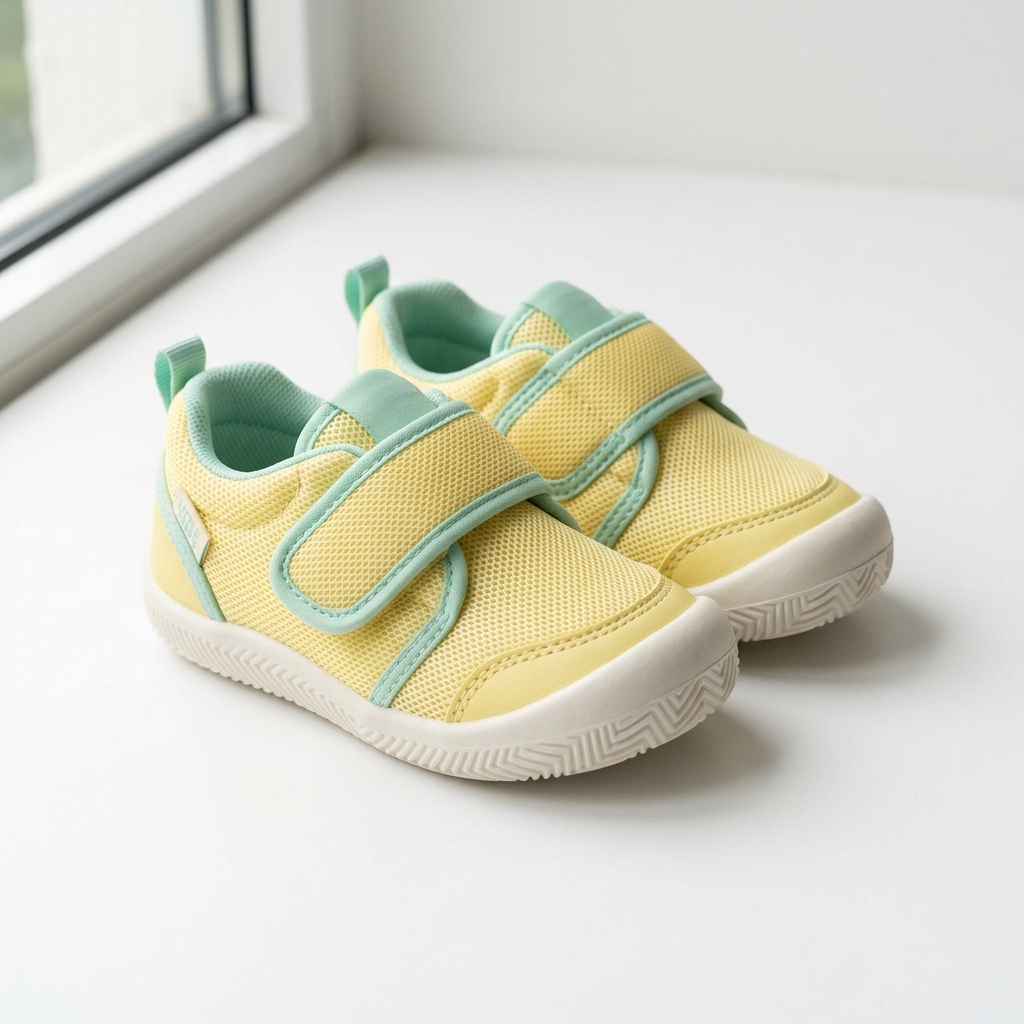
Watching your baby take their very first wobbly steps is one of the most magical milestones of parenting. Whether they are cruising along the sofa or bravely letting go of your hand, this new stage brings one urgent question: What are the best first walking shoes for a baby in India?
With countless options online—from stiff hard-leather booties to flimsy foam slippers—choosing the wrong footwear can actually hinder your baby’s natural motor coordination and balance.
In this comprehensive guide, we will break down when baby should start wearing shoes, the crucial debate between soft sole vs. hard sole shoes for toddlers, and what safety features to look for in Indian homes (especially on slippery marble and tiled floors).
1. When Should a Baby Start Wearing Shoes in India?
A common mistake many first-time parents make is strapping shoes onto an infant who is only crawling or sitting.
Pediatric podiatrists worldwide agree on one fundamental rule: Barefoot is best for babies learning to walk indoors.
When babies walk barefoot on clean, safe surfaces, the thousands of nerve endings on their soles send sensory feedback directly to their developing brain. This helps them learn balance, grip the floor with their toes, and strengthen ankle tendons.
When are shoes actually required?
- Stepping Outdoors: When walking on outdoor pavements, parks, gravel, or mall floors where sharp objects, dirt, or hot surfaces pose a hazard.
- Cold Tiled / Marble Floors: In Indian households with cold granite or vitrified tiles during winter and monsoon seasons.
- Independent Walking: Once your toddler is taking 10–15 unassisted steps daily and needs stable, anti-slip traction.
- Step on Paper: Place a sheet of blank paper against a wall on a flat floor.
- Trace Heel to Toe: Place your baby’s foot flat on the paper and trace the outline of both feet (one foot is often slightly larger).
- Measure in CM: Measure the distance from the heel line to the tip of the longest toe.
- Add Thumb Space: Add 0.8 cm to 1.0 cm of buffer space for growth and toe wiggle room.
- Ultra-lightweight: Under 90 grams per shoe—babies forget they even have shoes on!
- Anti-Slip Grooved TPR Soles: Tested on slick tiled and wooden floors.
- Breathable Flyknit Fabric: Keeps tiny feet fresh and sweat-free throughout the day.
- Easy-Slide Elastic Collar & Velcro: Slip on in under 3 seconds.
2. Soft Sole vs. Hard Sole Shoes for Toddlers: Which Is Best?
One of the biggest dilemmas parents face is whether to choose a traditional stiff shoe or a soft-sole walker.
| Feature | Soft Sole (Pre-Walkers & Early Walkers) | Hard Sole (Older Toddlers 3+ Years) |
|---|---|---|
| Flexibility | Bends effortlessly in half with thumb and forefinger | Rigid, stiff shank with minimal bend |
| Foot Muscle Development | Allows natural flexing, strengthening foot arch | Restricts natural foot movement |
| Ground Sensation (Proprioception) | High; baby feels floor texture through sole | Low; isolates foot from sensory input |
| Weight | Feather-light (<100 grams) | Heavy (can cause baby to drag feet or trip) |
| Ideal Age | 9 to 24 Months | 3 Years and above |
Pediatric Verdict: For babies taking their first steps, flexible, lightweight, soft-sole shoes with rubberized anti-skid grip are universally recommended. Avoid heavy, thick-soled shoes that force your baby into an unnatural, flat-footed stomp.
3. Top 5 Features to Look for in First-Walking Shoes in India
When shopping for first walkers for Indian weather and living conditions, prioritize these 5 non-negotiable features:
① Flexible & Non-Slip Sole with Grip
Indian homes primarily have smooth tile or marble floors, making slips and falls a frequent worry. Look for soles made from Thermoplastic Rubber (TPR) or textured natural rubber with grooved traction patterns. Avoid shiny plastic soles with zero friction.
② Wide & Rounded Toe Box
Babies’ feet aren’t shaped like adult feet—they are triangular, with wide-spread fan-shaped toes. A narrow, pointy shoe pinches developing cartilage. Always pick shoes with a wide, roomy toe box that allows tiny toes to spread naturally for balance.
③ Breathable, Hypoallergenic Upper Material
Indian climates—spanning hot summers and humid monsoons—lead to sweaty baby feet. Choose breathable knitted mesh or soft organic cotton canvas to prevent fungal rashes, blisters, and shoe odour.
④ Secure Velcro Fasteners (No Laces)
Laces constantly untie, creating tripping hazards. A wide Velcro strap keeps the shoe firmly anchored to the heel while making it effortless for parents to slip the shoe on and off a squirming baby.
⑤ Zero Heel Lift (Zero-Drop Sole)
The heel and toe should sit on the exact same level. Even a tiny wedge heel alters your baby’s posture, shifting their body weight onto underdeveloped knees and hips.
4. How to Correctly Measure Baby’s Foot Size at Home
Baby feet grow astonishingly fast—often half a shoe size every 2 to 3 months! To avoid buying shoes that cramp their toes:
Check our interactive Kids Shoe Size Chart India (UK vs US vs CM) to match your child’s foot length to the exact UK size.
5. Recommended Pick: TwinkleToes “Tom & Tingu” Toddler First Walkers
If you are looking for shoes that check every podiatric guideline without breaking the bank, the TwinkleToes Toddler Collection is engineered specifically for early walkers:
👉 Shop the TwinkleToes Toddlers & First Walkers Collection Here
6. Frequently Asked Questions (FAQ)
Q1. What are the best first walking shoes for baby in India?
The best first walking shoes for babies in India are lightweight shoes with a flexible rubber sole, breathable mesh or canvas uppers, a wide toe box, and an adjustable Velcro strap. They should protect little feet without restricting natural foot movement.
Q2. How long should a baby wear first walker shoes each day?
Keep shoes restricted to outdoor trips, rough terrains, or cold floors. When indoors in a safe environment, allow your baby to walk barefoot or in anti-skid grip socks to promote healthy foot tendon and arch development.
Q3. Can toddlers wear second-hand or hand-me-down shoes?
Pediatricians advise against using pre-owned shoes for toddlers. Every child compresses and wears down a shoe’s insole according to their unique walking gait. Wearing hand-me-downs can force your baby’s foot into an abnormal posture.
Q4. How do I know if my baby’s shoes are too tight?
Remove the shoes after 15–20 minutes of wear. If you notice red indentations on the top of the foot or around the toes, or if your toddler constantly tugs at their shoes or refuses to walk, the shoes are too tight.
Leave a Reply