
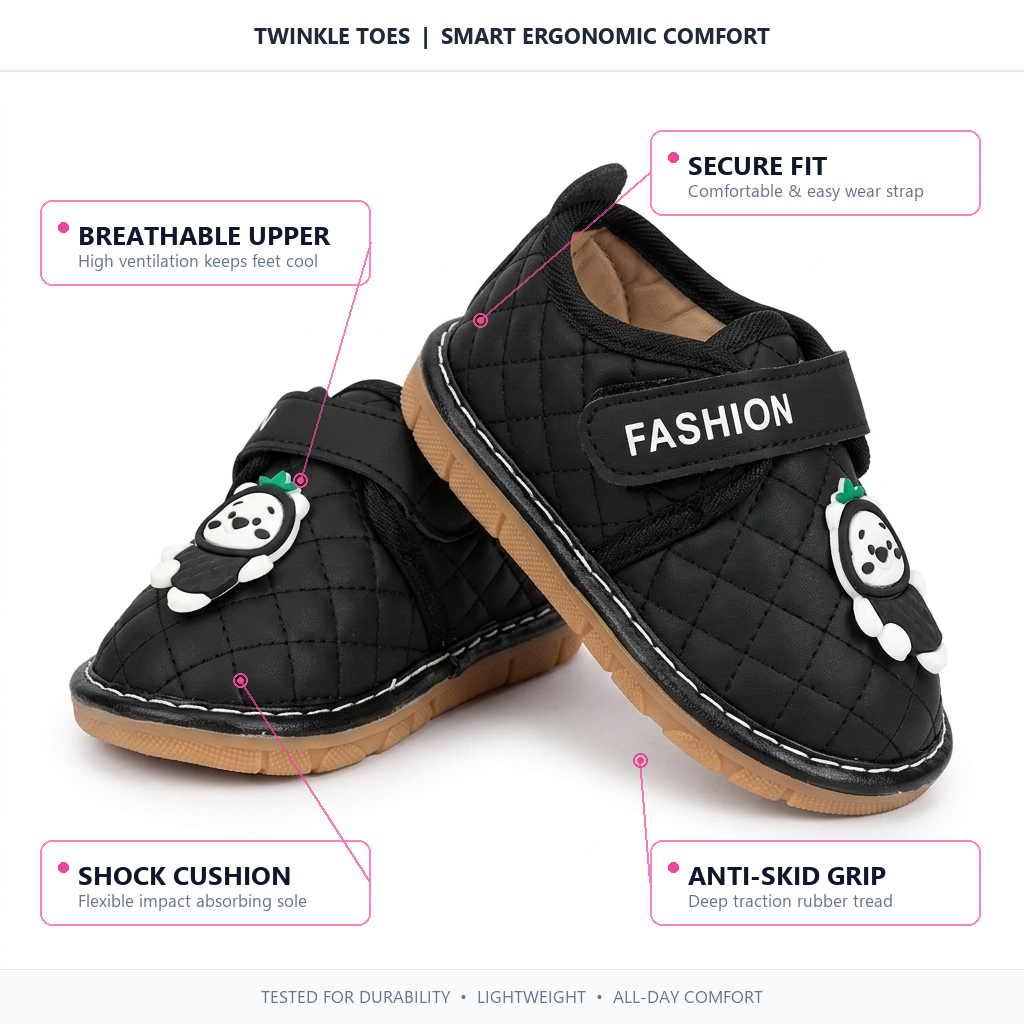
Every parent who has ever tried to force a squirming toddler’s chubby foot into a stiff, narrow shoe knows the daily struggle. You push, pull, wiggle, and tug—only for your toddler’s heel to stay jammed halfway down the collar while they cry in discomfort.
And when you finally manage to squeeze their foot inside, you take the shoe off 20 minutes later only to find angry red indentation marks across the top of their bridge and squeezed, overlapping pinky toes.
If this sounds familiar, you are not alone: over 60% of toddlers in India have naturally wide, fleshy feet with a high instep (puffy bridge).
Yet most mass-produced children’s shoes are built on narrow Western lasts that pinch developing bones. Finding the best shoes for toddlers with wide feet in India is essential not just for peaceful morning routines, but for safeguarding your baby’s natural bone alignment and balance.
In this guide, we break down why toddler feet are shaped this way, how to recognize wide and high-instep feet, the crucial shoe features to look for, and the best fitting techniques.
1. Why Do Indian Toddlers Have Wide, Chubby Feet?
Many anxious parents worry that their child’s wide or puffy feet indicate a medical issue. Rest assured, this is a completely natural biological phase:
1. Incomplete Bone Ossification: At 1 to 3 years old, a toddler’s foot is largely composed of pliable cartilage rather than hard bone.
2. Infant Fat Pads (Cushioning Layer): Babies are born with a thick, insulating fat layer covering the top of the foot and the inner sole. This natural padding protects fragile tendons while learning to bear weight.
3. Natural Fan-Shape Splay: Unlike adults whose feet have been reshaped by years of tapered shoes, a healthy toddler’s foot is triangular—narrow at the heel and fan-shaped across the toes. When bearing weight, the toes spread out wide to provide maximum balance.
As your child grows, runs, and jumps, foot fat naturally leans out between ages 3 to 5 years, and the foot transitions toward a more defined adult profile.
2. Wide Feet vs. High Instep: What Is the Difference?
Parents often confuse a wide foot with a high instep, but they require slightly different footwear solutions:
- Wide Foot (Horizontal Width): The foot is unusually broad across the ball of the foot (from the base of the big toe across to the pinky toe). Shoes feel tight on the sides, pinching the outer toes.
- High Instep (Vertical Bridge Height): The instep is the top bony bridge of the foot between the ankle and the toes. A high instep creates a puffy vertical curve. Shoes feel impossible to slide into, and the tongue or top strap cuts painfully into the top of the foot.
The Red Mark Test: Take off your toddler’s shoes after 15 minutes of walking. Red pressure marks on the sides of the toes mean the shoe is too narrow. Red horizontal lines across the top arch mean the shoe lacks instep depth.
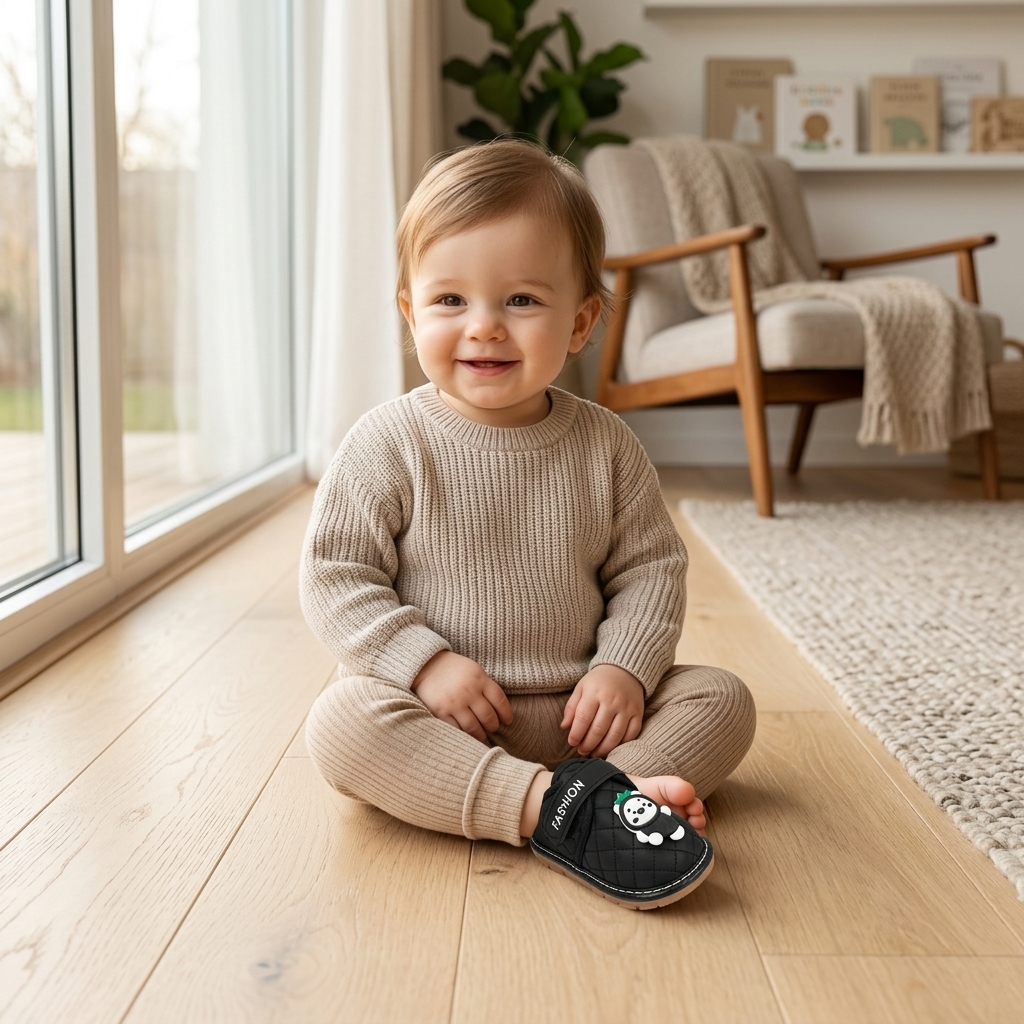
3. What to Look for in the Best Shoes for Toddlers with Wide Feet in India
When shopping for wide and chubby toddler feet in India, never buy stiff, narrow, slip-on loafers. Prioritize these 5 critical design elements:
① Anatomical Wide & Rounded Toe Box
Look for shoes that mirror the natural fan-shape of a child’s foot. A wide, rounded toe box ensures all five toes can lie flat and wiggle freely. Avoid tapered, pointy, or almond-shaped toe profiles that force the pinky toe underneath the fourth toe.
② Extra-Wide U-Throat Opening
The “throat” is the opening where the foot enters the shoe. For chubby toddler feet, look for a U-shaped throat where the tongue pulls back completely flat toward the toe. This creates a gaping entrance so chubby heels slide in effortlessly with zero resistance.
③ Fully Adjustable Dual-Velcro Straps
Elastic slip-ons and fixed fake laces are a nightmare for high insteps because they cannot accommodate vertical height. Long, adjustable hook-and-loop (Velcro) straps allow parents to loosen the volume across the bridge while locking down the heel snugly.
④ Stretchy & Flexible Upper Materials
Rigid synthetic patent leather does not give. Opt for breathable knitted mesh, soft canvas, or quilted textile uppers that gently stretch and mold to your toddler’s unique foot width without pinching.
⑤ Removable Insole for Extra Depth
A fantastic secret for high insteps: shoes with removable cushioned insoles. Removing the stock insole or replacing it with an ultra-thin leather liner instantly frees up an extra 3 to 4 millimeters of vertical depth.
4. Wide Fit Feature Comparison Guide
| Shoe Feature | Best Choice for Wide / Chubby Feet | What to Avoid |
|---|---|---|
| Toe Shape | Broad, anatomical, rounded fan-shape | Tapered, pointy, or narrow triangular toe |
| Closure | Dual long Velcro straps or lace-up | Fixed elastic bands, slip-on moccasins, buckles |
| Shoe Tongue | Free-floating, fully pull-back tongue | Sewn-in gusseted tongue with tight collar |
| Upper Material | 3D knit mesh, soft quilted cotton, supple leather | Rigid patent plastic, stiff unyielding canvas |
| Sole Flexibility | High forefoot flex with flat zero-drop heel | Stiff heavy block heel or inflexible wooden shank |
5. Fitting Hacks: How to Size Wide Toddler Feet
When buying shoes online for a wide-footed toddler in India, standard size charts can be tricky. Use these expert fitting strategies:
Hack 1: Use the Paper Insole Trace Method
Pull out the shoe’s removable insole and place it on the floor. Have your toddler stand directly on top of the insole.
- If their pinky toe or big toe spills over the sides of the insole, the shoe is too narrow.
- There should be 0.8 cm to 1.0 cm of length space at the front, and the entire width of the foot should sit inside the insole borders.
Hack 2: Should You Size Up for Wide Feet?
If a wide-width option is unavailable, parents frequently buy one size larger.
- Sizing up half a size is acceptable if the shoe has a secure ankle strap to prevent heel slippage.
- Do not size up two full sizes: Excess length creates a clown-shoe effect, causing your toddler to trip over the front bumper and drag their feet.
Hack 3: Choose Seamless, Low-Seam Socks
Thick tube socks with bulky toe seams can cause intense blister friction inside wide shoes. Always pair wide shoes with seamless, thin combed cotton socks that prevent chafing.
Explore our collection of wide-fitting toddler first walking shoes and cushioned boys sneakers built with roomy anatomical toe boxes and high-instep friendly Velcro closures.
Frequently Asked Questions (FAQ)
Q1. Are wide feet common in toddlers?
Yes, wide and chubby feet are completely normal in over 60% of toddlers. The presence of natural baby fat pads on the sole and bridge makes their feet appear broader until foot muscles and arches mature around ages 4 to 5.
Q2. How can I tell if my toddler’s shoes are too narrow?
Warning signs include difficulty getting the shoe on, toddler crying or trying to pull shoes off immediately, red marks along the outer edges of the foot or pinky toe, and toes overlapping inside the shoe.
Q3. Can tight or narrow shoes harm my toddler’s feet?
Yes. Toddler bones are soft cartilage. Forcing feet into narrow shoes can cause bunions, ingrown toenails, curled toes, poor balance, and early fatigue during walking.
Q4. What type of shoe closure is easiest for high-instep toddler feet?
Dual adjustable Velcro straps with a deep U-throat opening are the best option. They allow the shoe to open completely wide so chubby feet slide in without squeezing.
Leave a Reply